
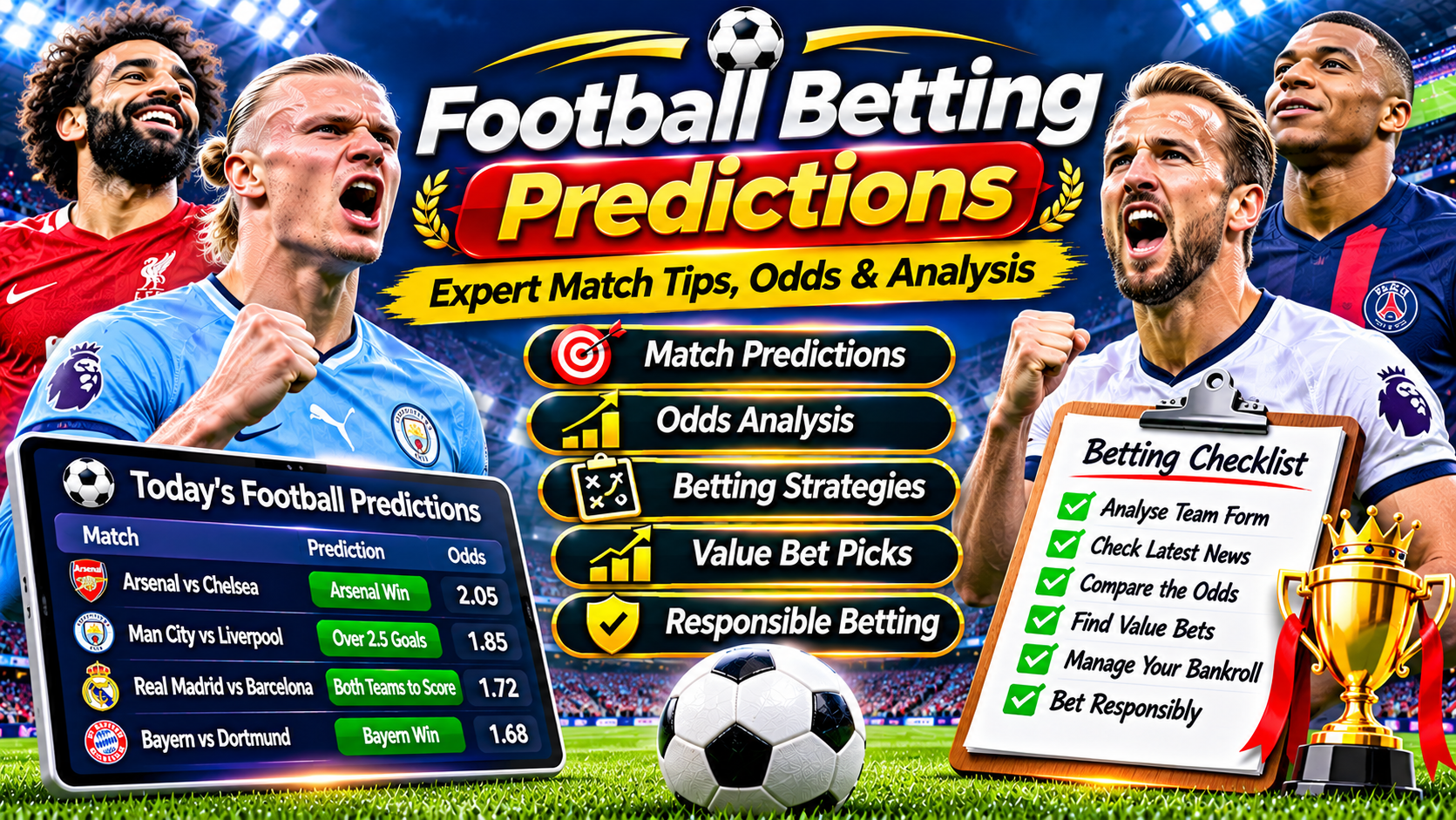
Pre-Match Research Checklist
Start your process with a simple, repeatable checklist that forces you to gather the right inputs before you place any bet. Look up both teams’ recent match pattern, including how they start games, how often they slow down after an early goal, and whether they Football Betting Predictions struggle against structured defenses. Then verify injuries and suspensions, because one missing starter can change a whole tactical matchup. Finally, confirm motivation drivers like managerial rotation or rivalry pressure, since these often show up in lineups and tempo.
Next, review matchup style rather than only league position. If one team presses high, check whether the other side has dependable build-up options under pressure. If a team wins the midfield, evaluate whether their opponent has a counter-plan or simply relies on long balls. Use this research to map likely game states, such as whether the favorite will dominate territory or whether the underdog may sit back and attack the transition.
Form, Lineups, and Tactical Edge
When you analyze form, focus on process signals instead of raw results. For example, examine shot volume, shot quality, and chance creation in the games that matter most for your market. If a team repeatedly generates low-quality chances, goal totals can be misleading, even if the scoreline looks convincing. Also consider home/away splits, but treat them as hints, not guarantees, especially when lineups change.
Lineups are where predictions become practical. Check whether key defenders are consistent in duels and whether the fullbacks contribute to attacks without leaving space behind. Evaluate the midfield balance: a team with one creative passer may struggle if that player is marked out of the game, while a team with multiple creators can keep generating chances even after adjustments. Then look for tactical leverage, such as a winger who frequently attacks the same side or a striker who wins aerial duels that match the opponent’s clearance patterns.
Odds and Value: How to Bet with Discipline
Use betting odds as a reality check, not as a target. A good bet is not only about picking the likely outcome, but also about whether the payout reflects the true probability. Compare the odds you see with your own implied view after research and scenario mapping. If your fair estimate is higher than the market’s implied probability, you have potential value; if not, pass even if the pick “feels” right.
Consider how pricing differs across markets. A team that is priced as a heavy favorite in the 90-minute result may still be vulnerable in goal markets if they tend to win narrowly. Meanwhile, an underdog might offer attractive odds in double-chance or draw-no-bet markets if their defensive structure is reliable. Always note the risk profile: some markets have higher variance, so align bet size with the confidence level and your bankroll limits.
Goal Markets Checklist for Better Risk Control
Goal markets can be especially useful when you translate tactics into likely scoring scenarios. Start by estimating whether both teams are likely to create chances, not just whether one team is stronger. If both teams generate quality chances through different pathways, markets like “both teams to score” can become logical, provided defensive gaps are credible. If the matchup suggests one-sided control and fewer transitions, totals like over/under goals may fit better than event-based markets.
Use a checklist for goal selection: identify dominant chance creation zones, check how often each team concedes after losing possession, and evaluate set-piece danger. Also consider finishing volatility; teams with high shot conversion may cool down, while teams that miss big chances might be due for regression. Finally, review referee tendencies and match tempo signals, since faster games often increase the number of attempts and defensive errors. With these inputs, you can pick markets that match the game script you expect rather than forcing a single outcome.
Conclusion
Use a pre-match checklist to collect injuries, tactical context, and form signals, then translate that information into likely game states. After that, verify whether the odds offer value relative to your own probability estimates, and keep your risk aligned with your confidence level. When you add goal markets thoughtfully, you gain more control over variance and can better match your tactical expectations. Stick to disciplined staking, avoid chasing losses, and remember that no single bet is guaranteed. The goal is consistency: make each pick with clear reasons, track outcomes, and refine your checklist for the next matchup.